The Magic of Autumn: The color rush of leaves and the secret of anthocyanins
- Deniz Orhun

- Dec 13, 2025
- 6 min read
Published: American Turkish Association of Washington DC (ATADC), ATA News, July-September 2024 , "THE JOY OF FOOD"
Some cultures in ancient Mesopotamia believed that the year had two beginnings: spring and autumn. Hence the celebration of the autumnal equinox. This period is also called "the time of renewal" or "purification." Harvests are over, and new preparations begin. The temperature difference between day and night increases. Maintaining your body temperature with the correct alimentation, rather than overdressing, can better prepare your body for winter. Autumn also offers us a fascinating spectacle. Day and night become equal on the autumnal equinox. The angle at which the sun's rays fall on the earth changes, and nature realizes that winter is approaching. Trees celebrate this change with polyphenolic compounds called anthocyanins. These compounds replace chlorophyll, which gives the leaves their green color, and the leaves turn to a riot of colors from yellow to red and even purple. In Maryland, we see a beautiful change in leaf color. In addition to coloring leaves, anthocyanins give many fruits and vegetables their vibrant colors and are antioxidants that play an essential role in maintaining our overall health. Eating seasonal foods is a great way to increase your antioxidant intake.
Nature's seasonal offerings include grapes, sweet potatoes, spinach, chestnuts, and pumpkins. Many of them contain nitric oxide (NO), a Nobel prize winning molecule elected as the discovery of the century. A lot of studies have been published on notable journals relating to NO increasing the release of dopamine and serotonin; in other words, the release of hormones associated with happiness.
As always, remember to drink plenty of water while watching this fascinating transformation of autumn. It is helpful to remember the scientific secrets behind this colorful feast that nature offers us, such as NO, anthocyanins, and antioxidant issues.
I wish you a colorful autumn season full of beautiful new beginnings.
Chicken Pot Pie
If you are feeling a little chilly, add 1 teaspoon of minced ginger to the recipe; it will help
warm you up.
Yield: 3 servings
Ingredients
2 medium sized chicken breasts
1 onion
3 cloves of garlic
1 carrot
2 handfuls of frozen peas
1 oz (approximately 2 tablespoons) of flour
1 small size highball type glass of heavy cream (7oz or 200ml or appx. less than a full cup)
1 lb of chicken broth (2 cups or 454 ml)
Black pepper, salt, red powder pepper to taste
3 pieces of puff pastry
1 egg yolk
1 oz of hazelnut oil (30 gr or 2 tablespoons)
Directions
1. In a sizzling frying pan, gently sauté the fragrant minced garlic and diced onion in a tablespoon of rich, nutty hazelnut oil until translucent and aromatic.
2. Add the chicken cubes and sauté until they're golden and juicy.
3. Add freshly diced carrots, their sweet crunch complementing the tender chicken.
4. Meanwhile, cook the green peas until tender in a separate pan, then set aside to absorb their natural sweetness.
5. Make a velvety roux by whisking a tablespoon of oil with flour in a frying pan, stirring until it turns into a nutty, golden base.
6. Return the browned chicken to the pan, then gradually pour in the water, stirring constantly to create a rich, silky sauce.
7. Stir the peas into the savory mixture, then sprinkle in your favorite blend of aromatic spices to bring layers of flavor to the dish.
8. Spoon this hearty filling into ovenproof individual bowls.
9. Drape delicate sheets of puff pastry over each dish, then brush with an egg wash for a golden-brown color.
10. Slide your creations into a preheated oven at 180°C (350°F) and wait with anticipation as the pastry puffs and turns golden.
Indulge in your homemade chicken pot pie, a golden-crusted treasure of flavors and textures!
Bon Appetit!

All rights reserved by Deniz Orhun
Chicken Pot Pie
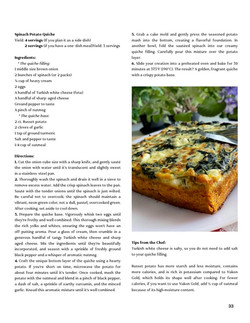
Spinach Potato Quiche
Yield: 4 servings (If you plan it as a side dish)
2 servings (if you have a one-dish meal)
Ingredients:
The quiche filling
1 middle size brown onion
2 bunches of spinach (or 2 packs)
¾ cup of heavy cream
2 eggs
A handful of Turkish white cheese (feta)
A handful of sharp-aged cheese
Ground pepper to taste
A pinch of nutmeg
The quiche base
2 ct. Russet potato
2 cloves of garlic
1 tsp of ground turmeric (or 1inch or 2.5cm small size fresh turmeric)
Salt and pepper to taste
1/4 cup of oatmeal
Directions
1. Cut the onion cube size with a sharp knife, and gently sauté the onion with water until it's translucent and slightly sweet in a stainless-steel pan.
2. Thoroughly wash the spinach and drain it well in a sieve to remove excess water. Add the crisp spinach leaves to the pan. Sauté with the tender onions until the spinach is just wilted. Be careful not to overcook; the spinach should maintain a vibrant, neon green color, not a dull, pastel, overcooked green. After cooking, set aside to cool down.
3. Prepare the quiche base. Vigorously whisk two eggs until they're frothy and well combined. This thorough mixing blends the rich yolks and whites, ensuring the eggs won't have an off-putting aroma. Pour a glass of cream, then crumble in a generous handful of tangy Turkish white cheese and sharp aged cheese. Mix the ingredients until they're beautifully incorporated, and season with a sprinkle of freshly ground black pepper and a whisper of aromatic nutmeg.
4. Craft the unique bottom layer of the quiche using a hearty potato. If you're short on time, microwave the potato for about four minutes until it's tender. Once cooked, mash the potato with the oatmeal and blend in a pinch of black pepper, a dash of salt, a sprinkle of earthy curcumin, and the minced garlic. Knead this aromatic mixture until it's well combined.
5. Grab a cake mold and gently press the seasoned potato mash into the bottom, creating a flavorful foundation. In another bowl, fold the sautéed spinach into our creamy quiche filling. Carefully pour this mixture over the potato layer.
6. Slide your creation into a preheated oven and bake for 30 minutes at 375°F (190°C). The result? A golden, fragrant quiche with a crispy potato base.
Bon Appetit!

All rights reserved by Deniz Orhun
Spinach Potato Quiche
Tips from the Chef:
Turkish white cheese is salty, so you do not need to add salt to your quiche filling.
Russet potato has more starch and less moisture, contains more calories, and is rich in potassium compared to Yukon Gold, which holds its shape well after cooking. For fewer calories, if you want to use Yukon Gold, add ½ cup of oatmeal because of its high moisture content.
A Nutrient-Rich Journey of Spinach
A balanced diet and reasonable portion sizes are essential. Spinach is high in oxalates, so if you're concerned about kidney health, it may be helpful to consult a healthcare professional or dietitian who can provide personalized advice based on your health history and dietary needs.
Spinach, originating in ancient Persia, evolved from the Persian "ispanai" to the English "spinach". It spread to China in 647 A.D. and Europe in the 11th century, gaining popularity during the Renaissance. Introduced to France by Catherine de Medici, it later reached North America in the 18th century. With the ‘Popeye Effect’, spinach consumption in the U.S. increased by 33% in the 1930s.
Scientifically known as Spinacia oleracea, spinach is an annual plant from the Amaranthaceae family. It grows best in well-drained soil, full sun or partial shade, and at temperatures between 50 and 60°F. Farmers use crop rotation and proper irrigation to increase yields. Regular harvesting of the outer leaves ensures continuous growth, making it ideal for home gardens and farms.
Spinach is a nutrient-rich leafy green vegetable known for its health benefits and low-calorie content. It provides essential vitamins and minerals, making it a superfood.
Spinach comes in many varieties, the main three being savoy, semi-savoy, and flat-leafed, each with unique characteristics and culinary uses.
Savoy Spinach: With its dark green, curly leaves, savoy spinach (like Regiment and Bloomsdale) is perfect for hearty dishes. Its robust texture holds up well in cooking.
Semi-Savoy Spinach: Easier to clean with slightly wrinkled leaves, semi-savoy varieties such as Tyee, Catalina, Teton, and Indian Summer offer an outstanding balance of texture and convenience.
Flat or Smooth-Leaf Spinach: Smooth, broad leaves make flat-leaf spinach (like Space and Red Cardinal) versatile for salads, smoothies, and more.
Baby Spinach: Tender and young, baby spinach is ideal for fresh salads and quick sautés, adding a mild flavor to your dishes.
New Zealand Spinach: Not a true spinach, but this heat-tolerant plant thrives in hot weather, offering a similar taste and texture.
Malabar Spinach: With its fleshy, heart-shaped leaves, Malabar spinach adds an exotic twist to your meals. It's not a true spinach, but it's equally delightful.
Perpetual Spinach: Related to chard, perpetual spinach has a similar flavor and is resilient, making it an excellent option for long-lasting greens.
These varieties offer versatile options for different cooking and dining preferences.





Comments